Astrophotography Cameras Explained: Astro vs Full Spectrum
Key Takeaways TL:DR
An astro modified camera has its IR cut filter replaced with one that allows more red light (particularly hydrogen alpha at 656nm) through, perfect for nebulae.
A full spectrum camera has the IR cut filter removed entirely, so the sensor captures ultraviolet through to infrared.
An astro mod can deliver up to one extra stop of red sensitivity over a standard camera.
Full spectrum cameras are useless without filters; you need them to control which wavelengths reach the sensor.
Best for landscape astro and general daytime use: astro modified.
Best for maximum versatility (IR, UV, deep sky astro): full spectrum.
Right then. Modified cameras. Are they actually worth it?
If you've been falling down the astrophotography rabbit hole on YouTube, you've probably heard the words "astro modified" and "full spectrum" banded around. Sounds expensive. Sounds technical. Sounds like the sort of thing that ends with you warily handing over a perfectly good camera to a chap with a steady hand and a screwdriver.
Good news. The basics are simpler than they sound. Once you understand what's actually being modified inside the camera, you'll know exactly which version (if any) suits the kind of photographs you want to take.
So let's get into it. We'll cover what these modifications mean, why understanding the basics of the electromagnetic spectrum is important, and what filters you'll need to actually use them.
What is light, really? A quick detour
Bear with me. This bit matters.
Light is a form of electromagnetic radiation. It behaves as both a particle and a wave, but for our purposes today we can ignore the quantum mechanics nonsense and just treat it as a wave.
What we perceive as different colours are actually different wavelengths, measured in nanometres (nm). A wavelength is simply the distance between two peaks of a wave.
Violet (the high-energy end): around 400nm
Red (the low-energy end): around 700nm
Visible spectrum: everything between 400 and 700nm
Beyond 400nm in one direction you get ultraviolet light, then X-rays and gamma rays. In the other direction, beyond 700nm, you have infrared light then radio waves with longer wavelengths and less energy.
We can't see UV or IR with our eyes. But modified cameras can see both. And that's where things get interesting.
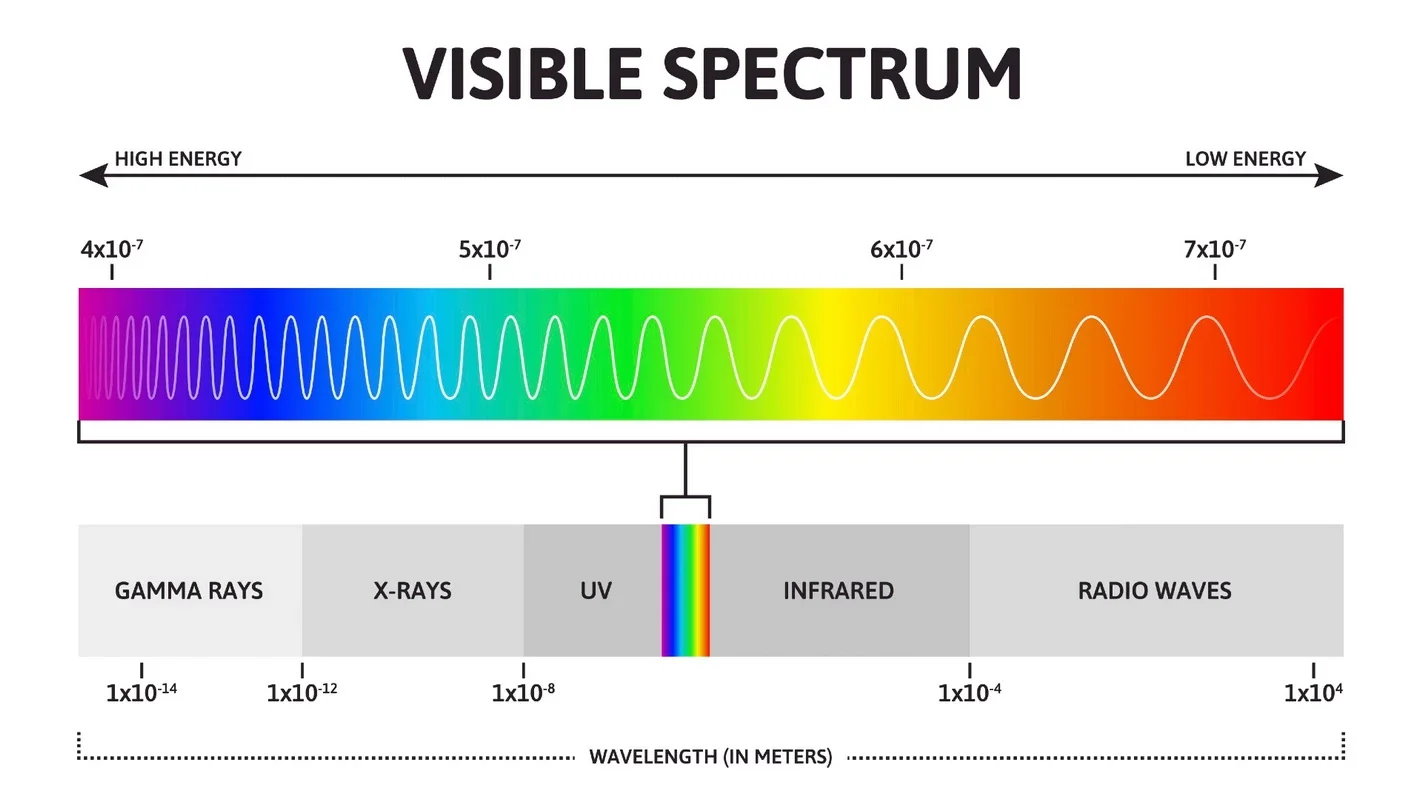
Image Source: https://ledrhythm.com/news/visible-lights.html
Why do cameras block these wavelengths in the first place?
Off-the-shelf cameras have a filter sat in front of the sensor (the IR cut filter) that blocks ultraviolet and infrared light. The aim is simple: produce images that match what your eyes perceive.
The trouble is, plenty of fascinating things in the night sky emit light outside what our eyes can see. Most notably, the hydrogen alpha (Hα) wavelength at 656nm, which sits right at the edge of what a standard camera can capture. This is why those deep red nebulae you see in NASA images look so muted when you shoot them with a stock camera. The filter's chopping off the very wavelengths you're trying to capture.
That standard IR cut filter also has a noticeable drop-off in red sensitivity well before it hits 656nm. So you're not just losing the infrared; you're losing the rich reds too.
The graph below, based on data from JMC Scientific Consulting Ltd, shows the % of light reaching the sensor (Y-axis) vs. the wavelength of light in nm (x-axis) for a Sony A7iii. What this visually shows is what I’ve explained thus far:
You can see that a tiny bit of UV gets in below 400nm wavelength
Light transmission drops off the closer you get to infrared
99%+ of the light getting through the IR cut filter in front of the sensor is in the visible light range
Important to see the data here for Ha at 656nm, the light transmission is around 15%. It’s there, but not a lot of it!
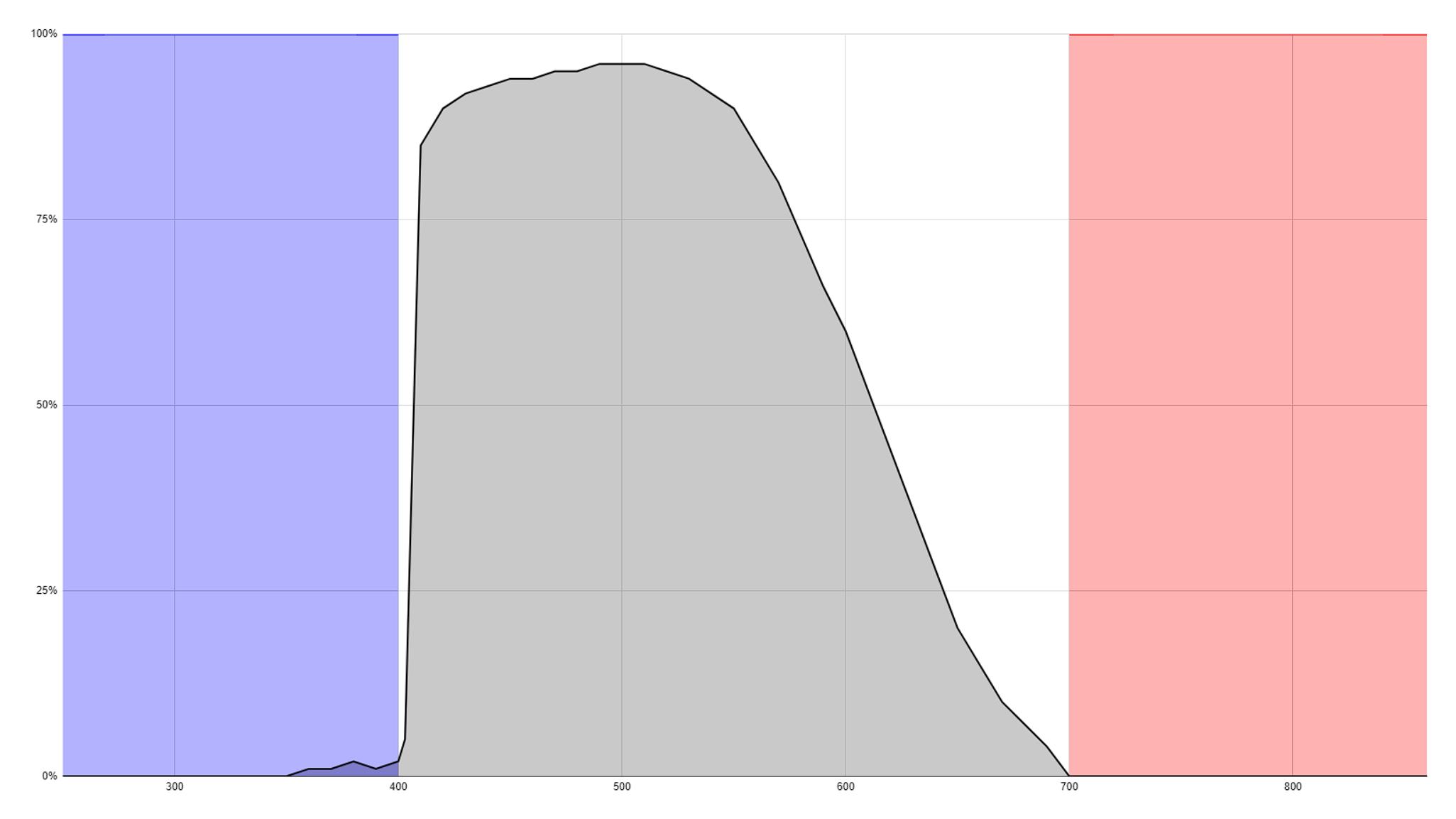
A7iii light transmission % by light wavelength with stock IR cut filter
So, what is an astro modified camera?
An astro modified camera is a camera where the standard IR cut filter has been replaced with one that allows more of the red part of the visible spectrum (particularly hydrogen alpha at 656nm) to pass through to the sensor.
Mine's a Sony A7S that's been astro modified. The original filter's gone, replaced with one designed specifically for astrophotography.
The result?
Up to one extra stop of sensitivity in the red end of the spectrum
Much richer capture of deep sky objects, especially nebulae
Deeper reds and finer detail in the Milky Way
The ability to pick up faint stars and structures a stock sensor would miss
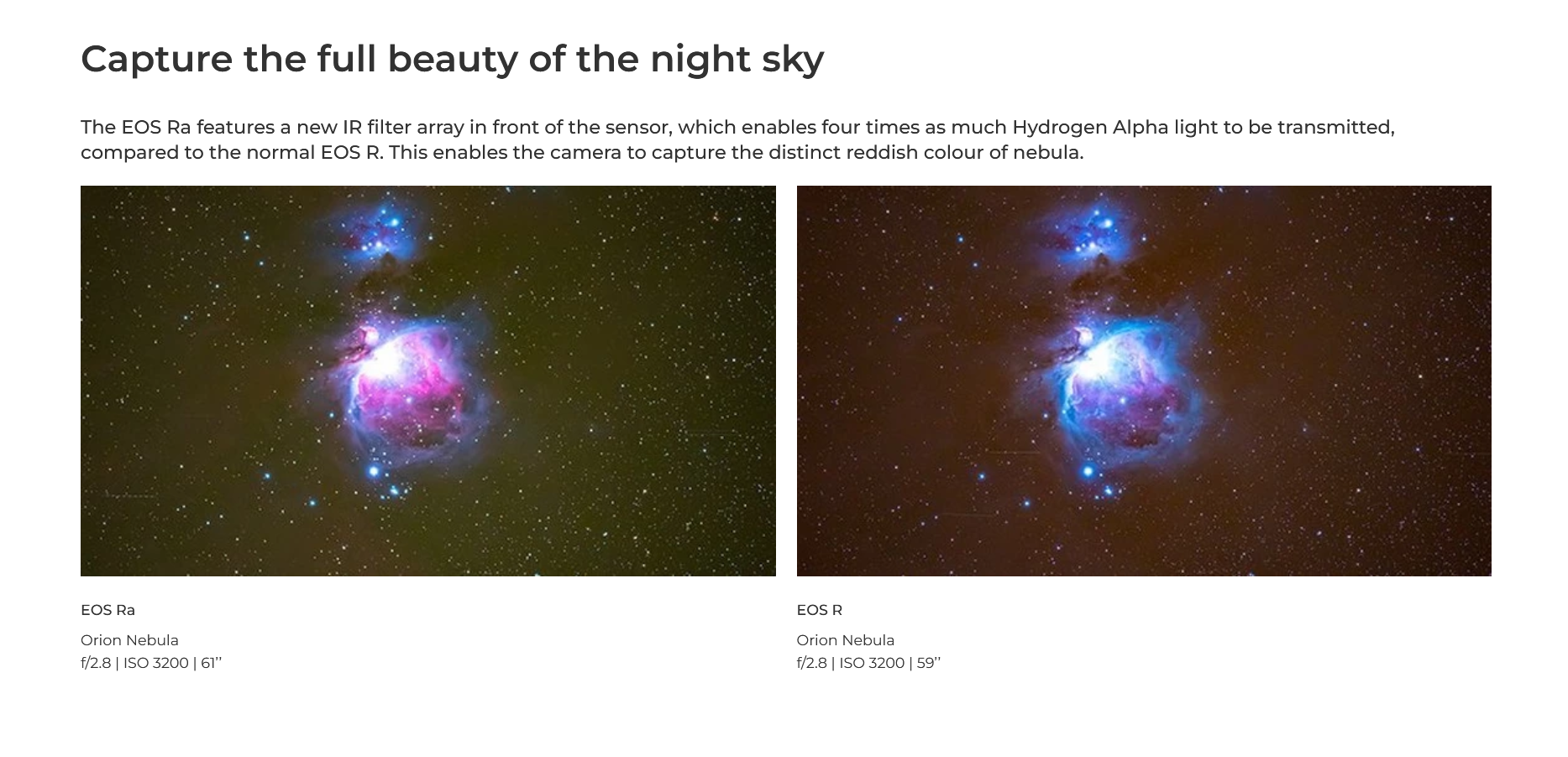
A comparison between stock Canon EOS R and Astro Modified EOS Ra https://www.canon.co.uk/cameras/eos-ra/
If we overlay what light transmission looks like after a conversion, you can see the transmission of the astro-modified filter (red line) vs the stock IR Cut filter (black line).
For Ha emissions at 656nm, transmission has increased dramatically from around 15% to 95%. What that means in practice is that for a 10 second exposure on an astro-modified camera, you would need around 60 seconds on a stock camera to get the same amount of Ha data.
The longer exposure on a stock camera however would capture 6x more of the other wavelengths, which in turn may over expose stars.
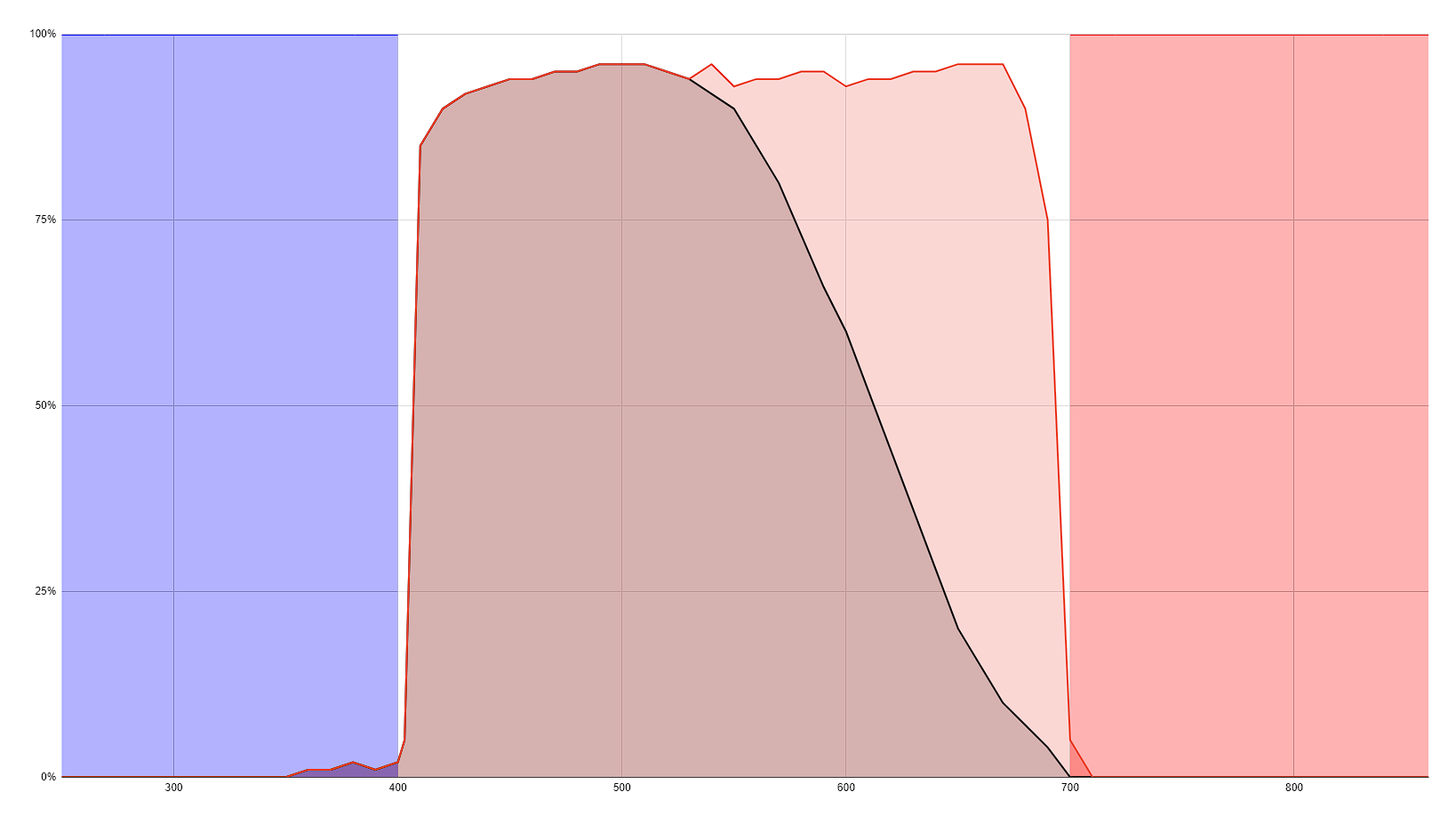
A7iii light transmission % by light wavelength with stock IR cut filter Vs Astro Mod
Can you still use an astro modified camera for normal photography?
Yes. With caveats.
You'll need to apply a custom white balance to counteract the extra red the sensor's now recording. No additional filter is required. Shooting in raw is always recommended!
You can slot in an IR cut filter to bring the camera back to factory-default response, but it's not strictly necessary. Your white balance will sit lower than you're used to in post, but it's nothing you can't learn to live with.
And what is a full spectrum modified camera?
A full spectrum modified camera is one where the internal IR cut filter has been removed entirely, leaving the sensor sensitive to ultraviolet, visible and infrared light all at once.
I sent my trusty old A7 IV across the pond to get this done at https://www.spencerscamera.com/. The thing now sees pretty much everything from UV up into the infrared.
This gives you the maximum flexibility for:
Infrared photography: green foliage becomes ghostly white, blue skies turn inky black in monochrome
Ultraviolet photography: reveals patterns in flower petals that are invisible to us but very visible to bees and other insects
Astrophotography: paired with the right filters, you get the same advantages as an astro mod (and a lot more besides)
The catch? Without filters, the sensor records UV, visible and IR all at once. You get a red-tinted mess on the back of the camera. Useless on its own. Which brings us to the part where your bank account starts to wince.
Here’s two shots of my messy office, one with NO filter, and the other with a Kase clip-in UV/IR cut filter. Note the filtered image has the correct white balance, I just have a blue/purple light on in the room!
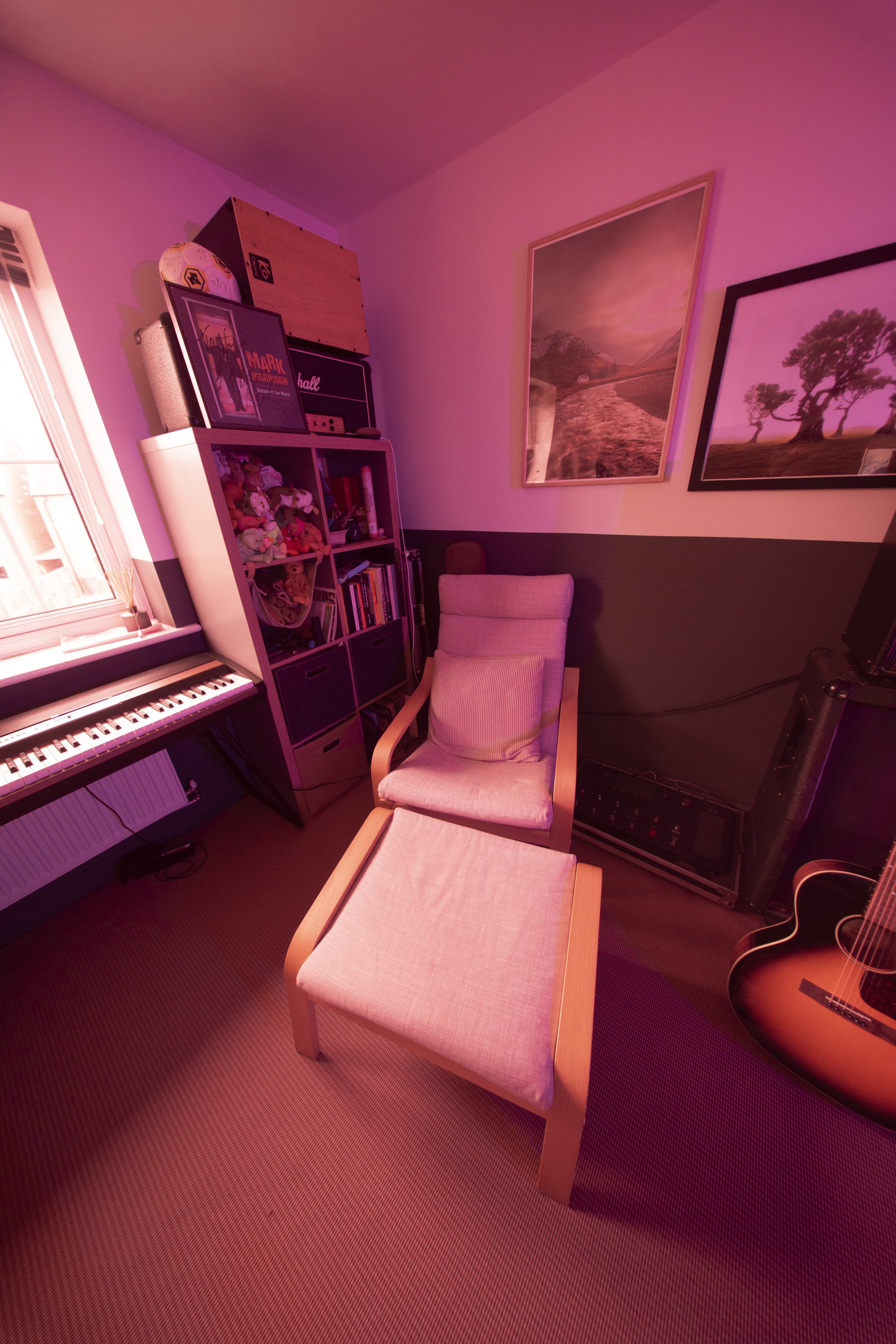
A7iv Full Spectrum - No Filter
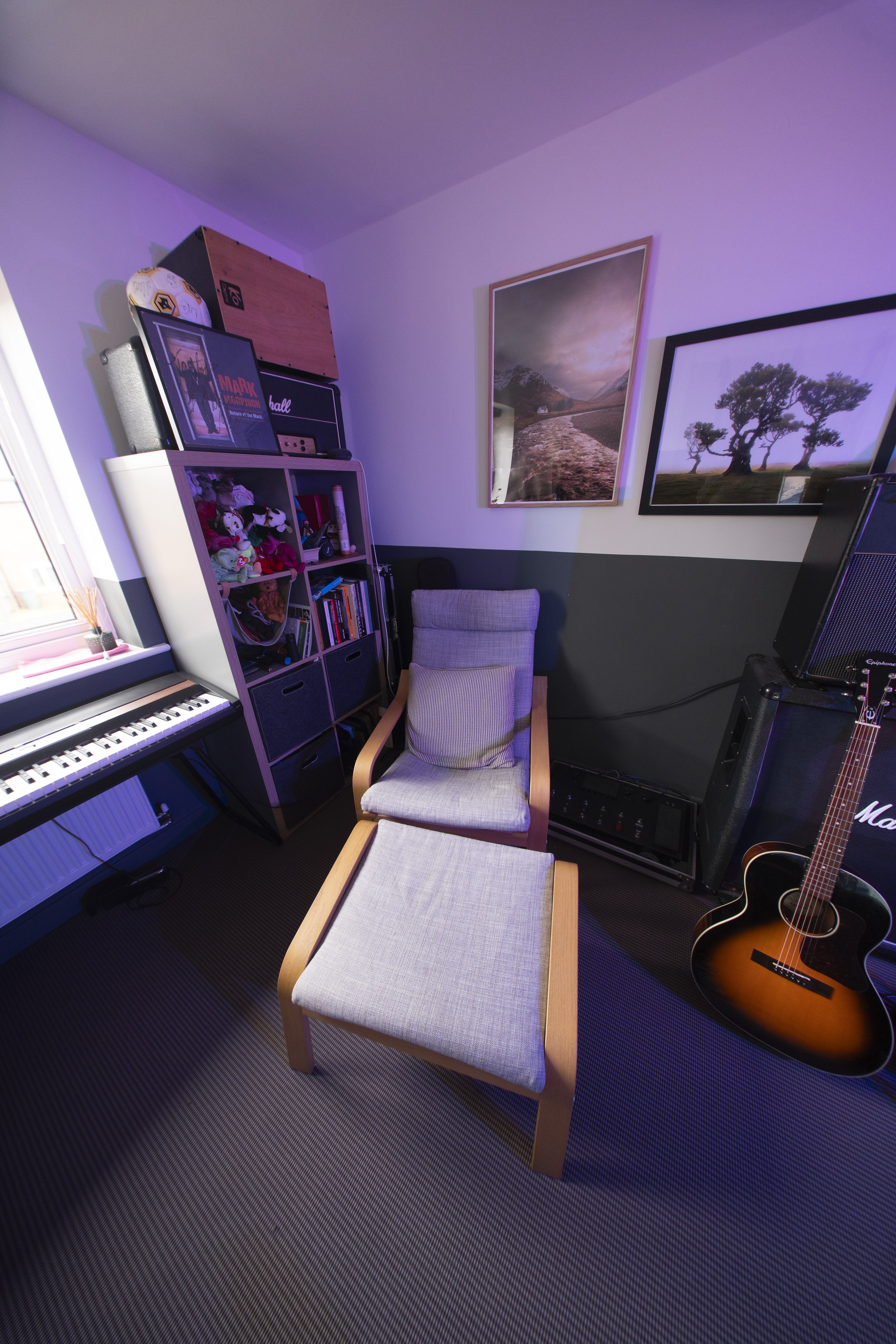
A7iv Full Spectrum - Kase UV/IR Cut Filter
If we now look at the graph of light transmission of all three options, stock / astro modified and full spectrum, you can see the difference.
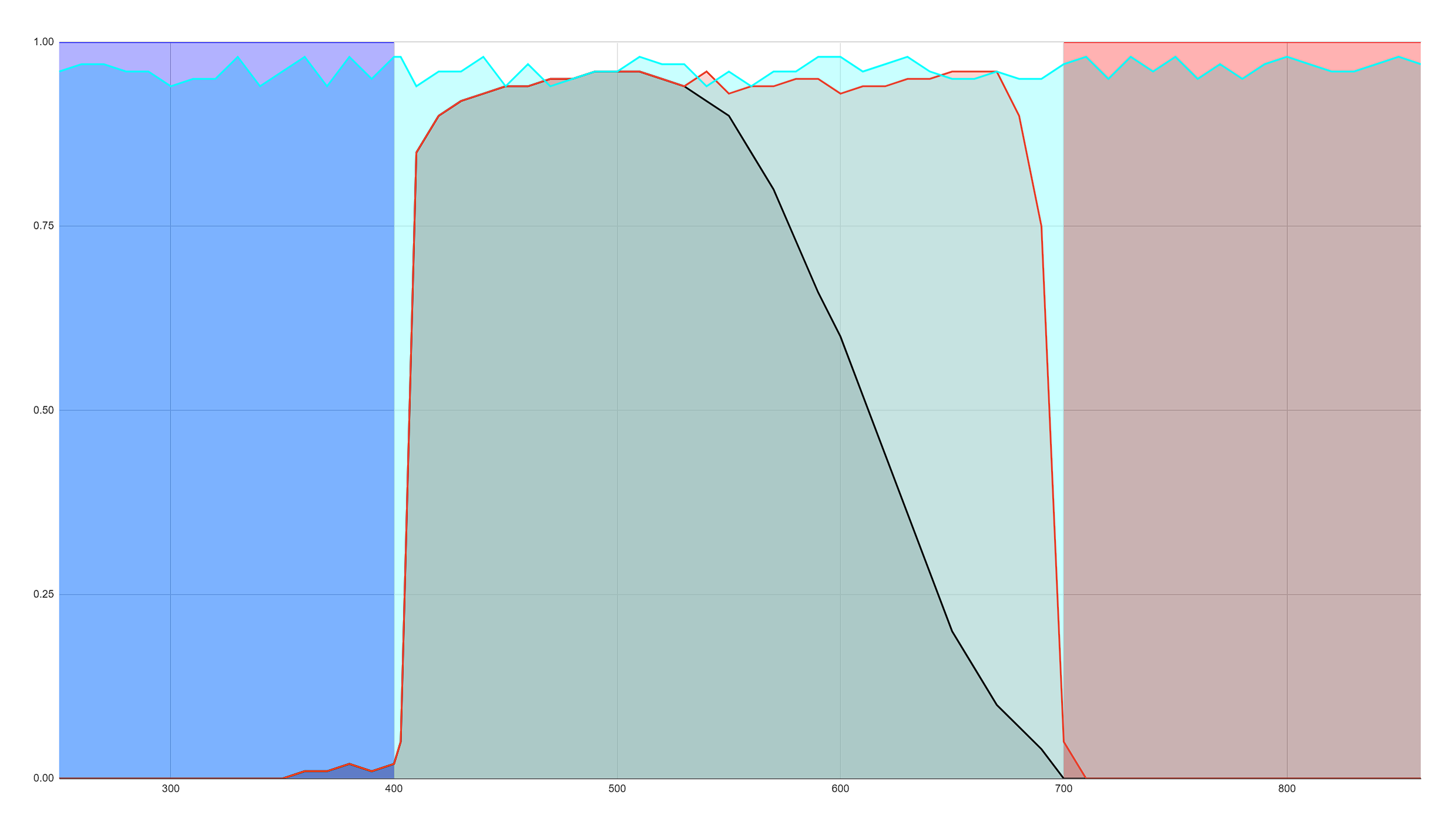
Light Transmission BY Wavelength for Full Spectrum (cyan) Astro Modified (red line) and Stock (black)
The filters you'll need (and yes, you will need filters)
Once your camera's full spectrum, the filter you screw onto the front of the lens becomes the thing that decides what part of the spectrum you actually capture. Here's the rough lay of the land.
Broad spectrum filters
Broad spectrum means a filter that allows a wide band of light wavelengths through. For example an IR/UV cut filter is a broad spectrum filter allowing wavelengths between 400-700nm through.
These can mimic what's already in a standard camera, or in an astro mod. Useful if you want to use your full spectrum camera as a "normal" camera like I showed above, or to replicate the astro mod response without committing to the modification permanently.
Narrow band filters (for deep sky astrophotography)
These only let very specific wavelengths through. Usually limited to a range of +-50nm. Usually, the narrower the gap, the more expensive the filter though! The three you'll hear about most in Astrophotography are:
Hydrogen Alpha (Hα), 656nm: the red emission from nebulae (red spike)
Oxygen III (OIII), 500nm: the blue-green details in supernova remnants and planetary nebulae (Cyan Spike)
Sulfur II (SII): the deep red sulfur emissions in certain nebulae (Yellow Spike)
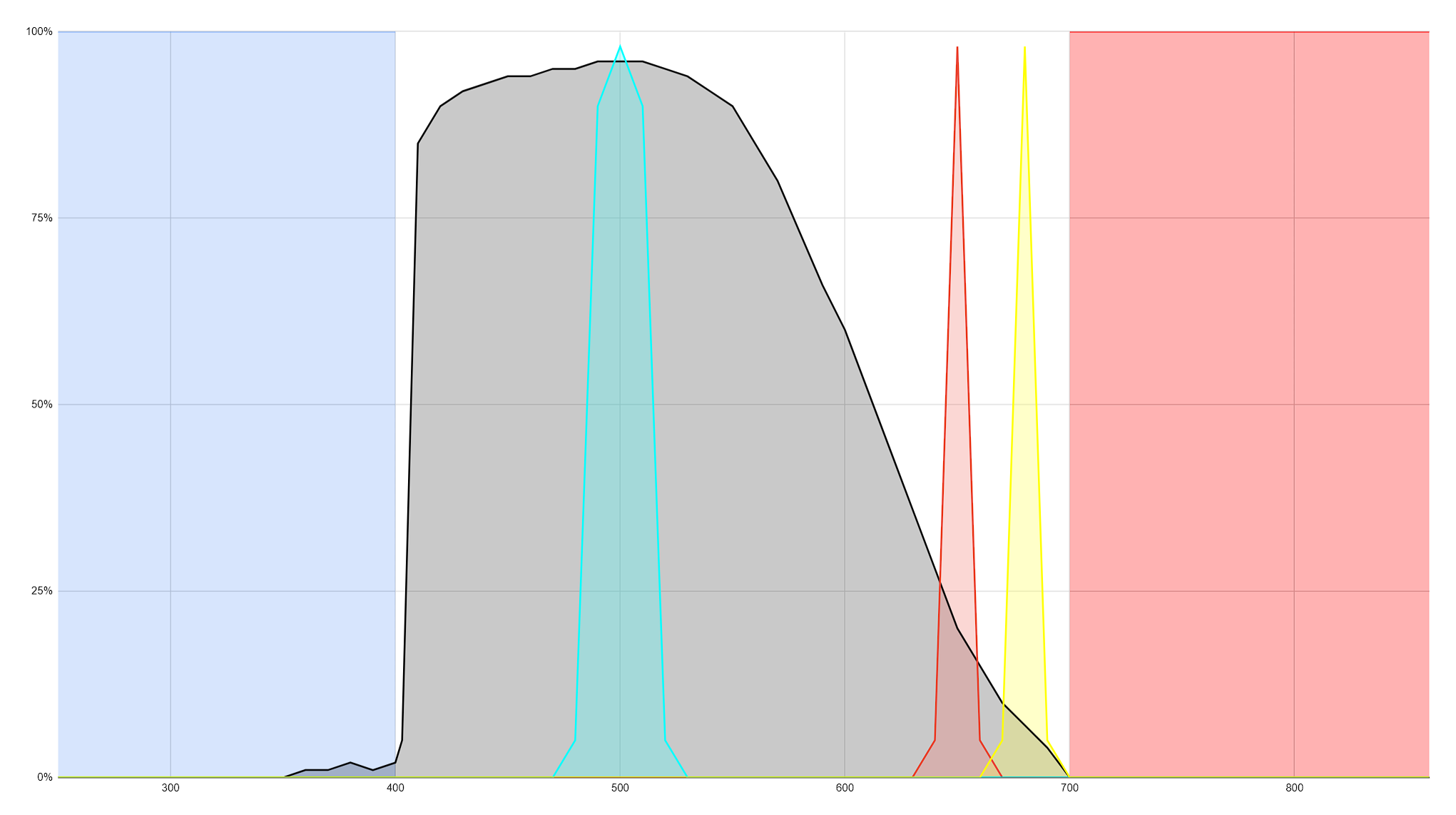
Light Transmission of stock A7iii sensor vs Narrowband Astro Filters
The clever bit: because narrow band filters only let through specific wavelengths, you can shoot perfectly usable data even under heavy light pollution or a full moon. Properly useful if you live anywhere near a town.
If you've ever seen a "Hubble palette" image and wondered how the colours work, this is it. Data from Hα, OIII and SII gets assigned to the R, G and B channels in post, producing those iconic false-colour nebula shots NASA's so well known for.
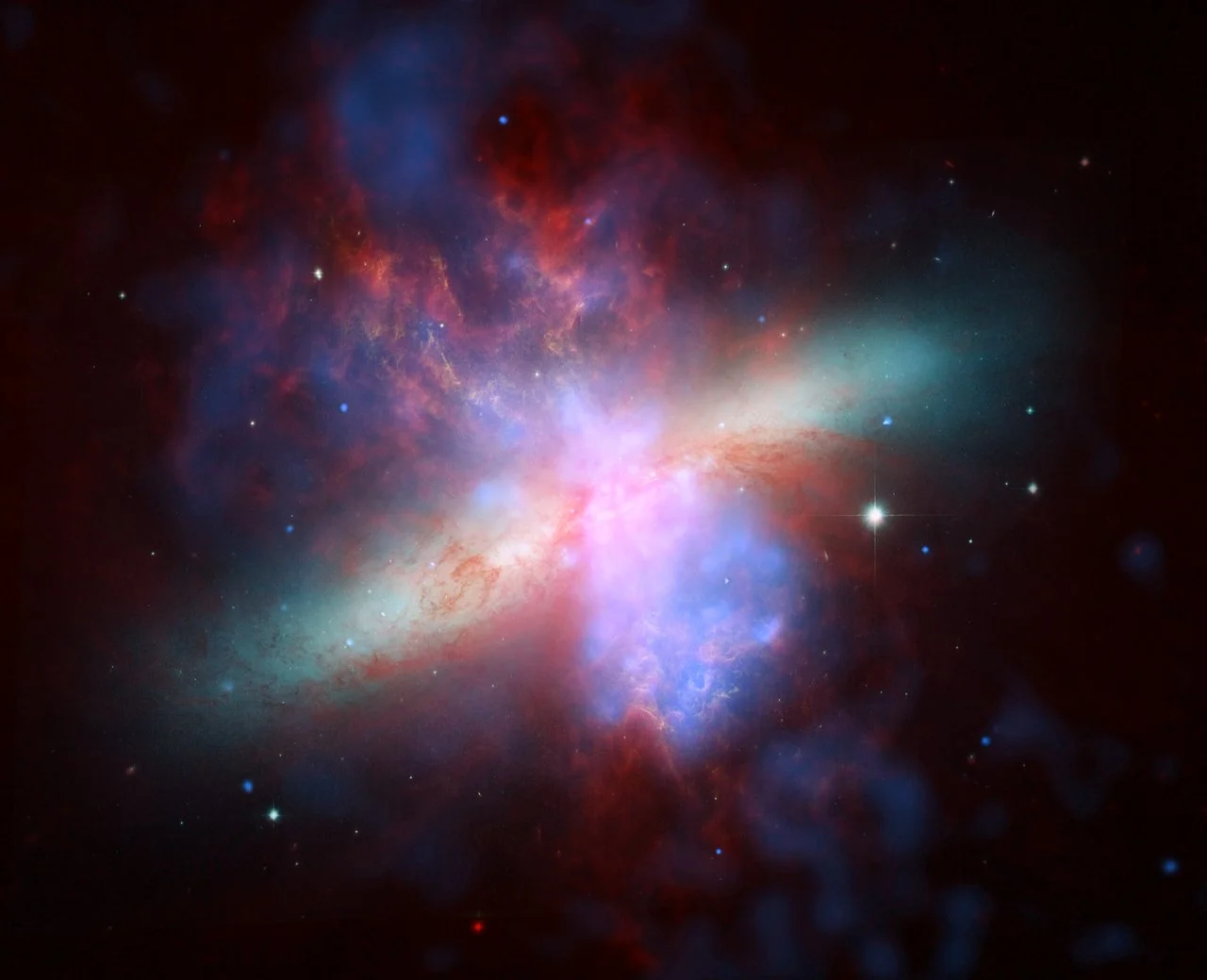
Source - https://asd.gsfc.nasa.gov/blueshift/index.php/2016/09/13/hubble-false-color/
In this particular example of M82, it’s made up of data from three observatories:
BLUE: X-ray data recorded by Chandra
RED: Infrared light recorded by Spitzer
ORANGE Ha Emissions and YELLOW/GREEN for the bluest visible light from Hubble
IR pass filters
These block visible and UV light and only let infrared through. They come in different cut-off points:
550nm: lets through some visible red plus IR, giving you false-colour IR effects
720nm: cuts the whole visible spectrum, giving you pure infrared
850nm: deeper IR, fantastic for high-contrast black and white
For high-contrast monochrome IR landscapes, the 720nm is probably the sweet spot and what I’ve used the most.
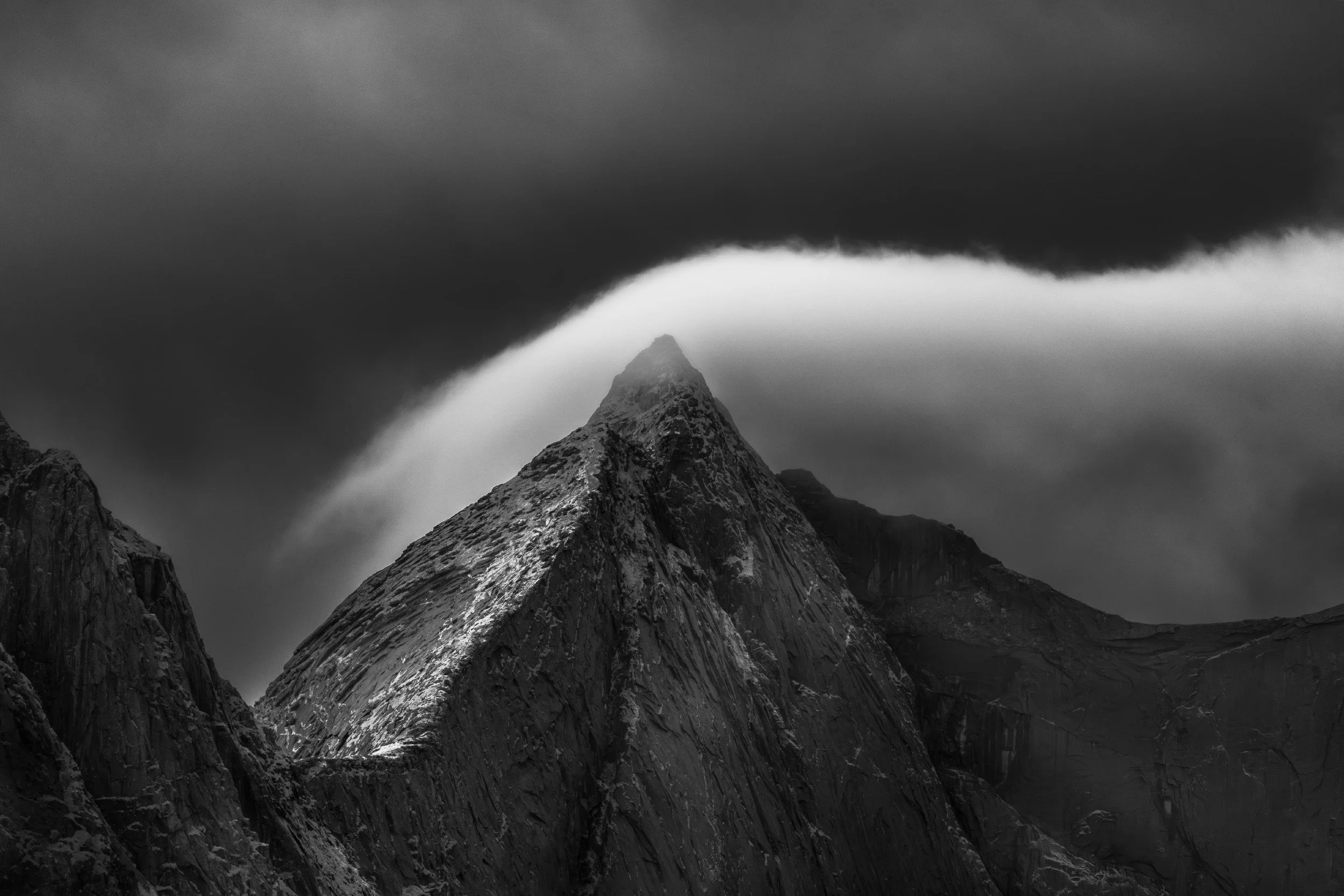
Norway - Lofoten - Shot using a 720nm filter converted to black and white
UV pass filters
Blocks visible and infrared, lets only UV through. Used in scientific work, forensic photography, and the occasional bit of creative portraiture (think highlighting freckles, or capturing the hidden patterns inside flower petals that have evolved specifically to attract bees).
You can see the in the Dandelion image below. Shot with UV light only (LEFT) you can perhaps see why bees would be more attracted to it, and visible light (RIGHT) is the boring yellow weed that plagues our lawns!
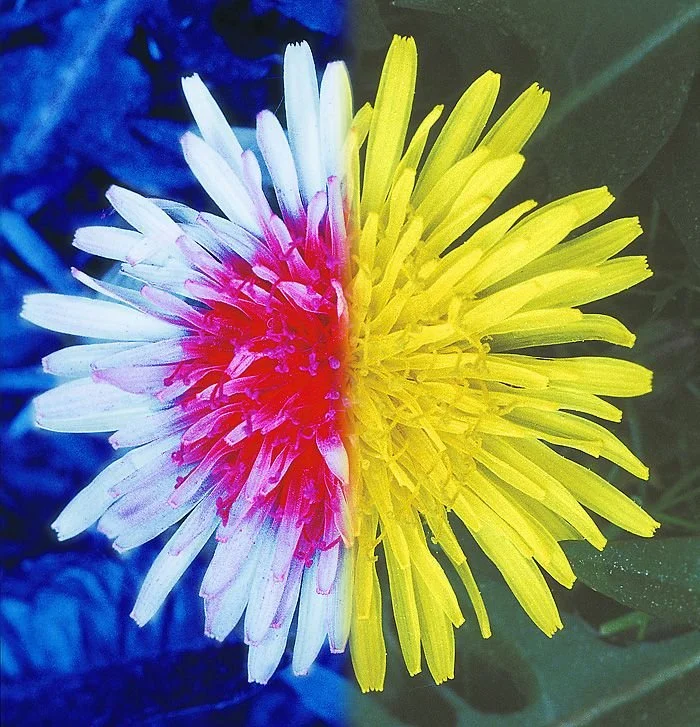
Source: https://en.wikipedia.org/wiki/UV_coloration_in_flowers
Astro mod vs full spectrum: which is best for astrophotography?
| Feature | Standard Camera | Astro Modified | Full Spectrum |
|---|---|---|---|
| IR cut filter | Full | Replaced (lets more red through) | Removed entirely |
| Hα sensitivity (656nm) | Limited | Excellent | Excellent (with narrow band filter) |
| Infrared photography | No | No | Yes (with IR pass filter) |
| Ultraviolet photography | No | No | Yes (with UV pass filter) |
| Daytime general use | Yes | Yes (custom WB) | Yes (with broad spectrum filter) |
| Filter investment needed | None | None | Significant |
| Best for | Everything else | Landscape astro + general use | Maximum versatility |
The short version:
Get an astro mod if you want to shoot landscape astrophotography and the occasional bit of normal daytime work without buying a stack of new filters.
Get a full spectrum if you want to do all of it (IR, UV, deep sky astro) and you're prepared to invest in filters, probably a star tracker, and a working knowledge of deep sky post-processing. (It's not a small money pit.)
A quick aside: seeing infrared with your iPhone
Want to see invisible IR light in action right now? Point a full spectrum camera at your iPhone and activate Face ID.
Your eyes see nothing. But on the camera screen you'll see a constellation of flashing dots scanning your face. That's the LiDAR sensor, working in infrared.
Properly creepy. And properly cool.
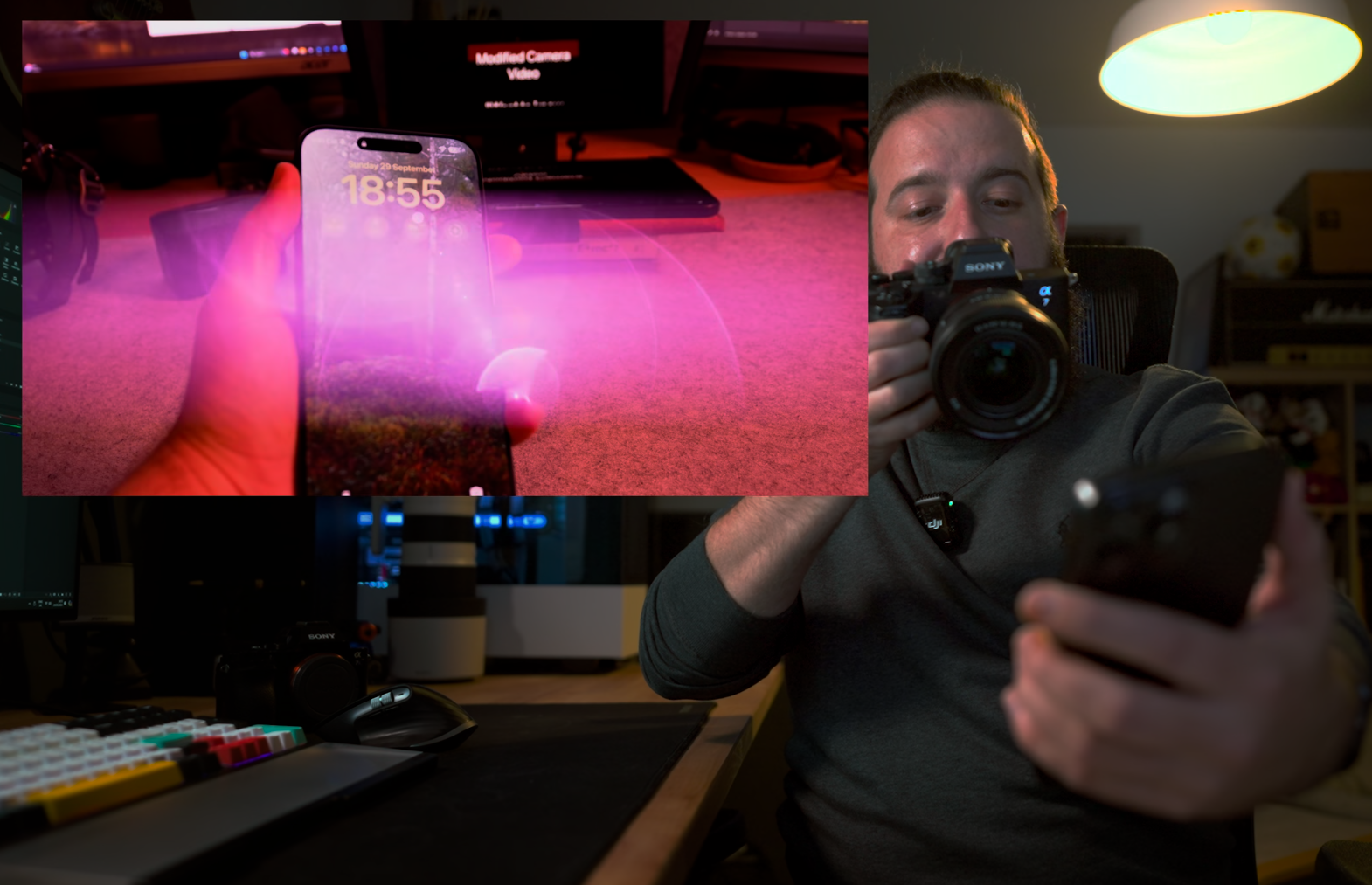
Filming an iPhone with LiDAR FaceID checking my face with a full spectrum camera
Frequently Asked Questions
Quick answers to the most common questions about modified cameras for astrophotography.
Can I still use an astro modified camera for normal photography?
Yes. Shoot in raw and apply a custom white balance to counteract the extra red sensitivity. No additional filter is strictly required, though an IR cut filter will return the camera to a more standard colour response if you prefer.
What's the main difference between an astro modified camera and a full spectrum camera?
An astro modified camera has its IR cut filter replaced with one that lets more red light (particularly hydrogen alpha at 656nm) through. A full spectrum camera has the IR cut filter removed entirely, making the sensor sensitive to ultraviolet, visible and infrared light, but it requires external filters to produce usable images.
Do I need additional filters for a modified camera?
For an astro modified camera, no filters are strictly required for general use. For a full spectrum camera, filters are essential. Without one, the sensor records UV, visible and IR light all at once, producing a red-tinted, unusable image.
What's Next
If you'd rather see all this in motion, here's the video version where I walk through the modifications, the filters, and a few demos on the bench.
Modified cameras open up a whole new world of photography in light you can't see. Whether you're chasing the deep reds of distant nebulae, exploring infrared landscapes, or revealing the hidden patterns inside flower petals, the right modification paired with the right filters genuinely expands what you can create.
A quick summary to send you on your way:
Astro modified: the right choice for landscape astrophotography and general daytime use, without committing to a stack of new filters
Full spectrum: maximum versatility across IR, UV and deep sky astro, but be prepared to invest in filters (and probably a star tracker, and probably a working knowledge of deep sky post-processing, which is a whole other kettle of fish)
If you found this useful and want to follow along as I put both cameras through their paces, head over to my YouTube channel and subscribe. Plenty more astrophotography and landscape work on the way.